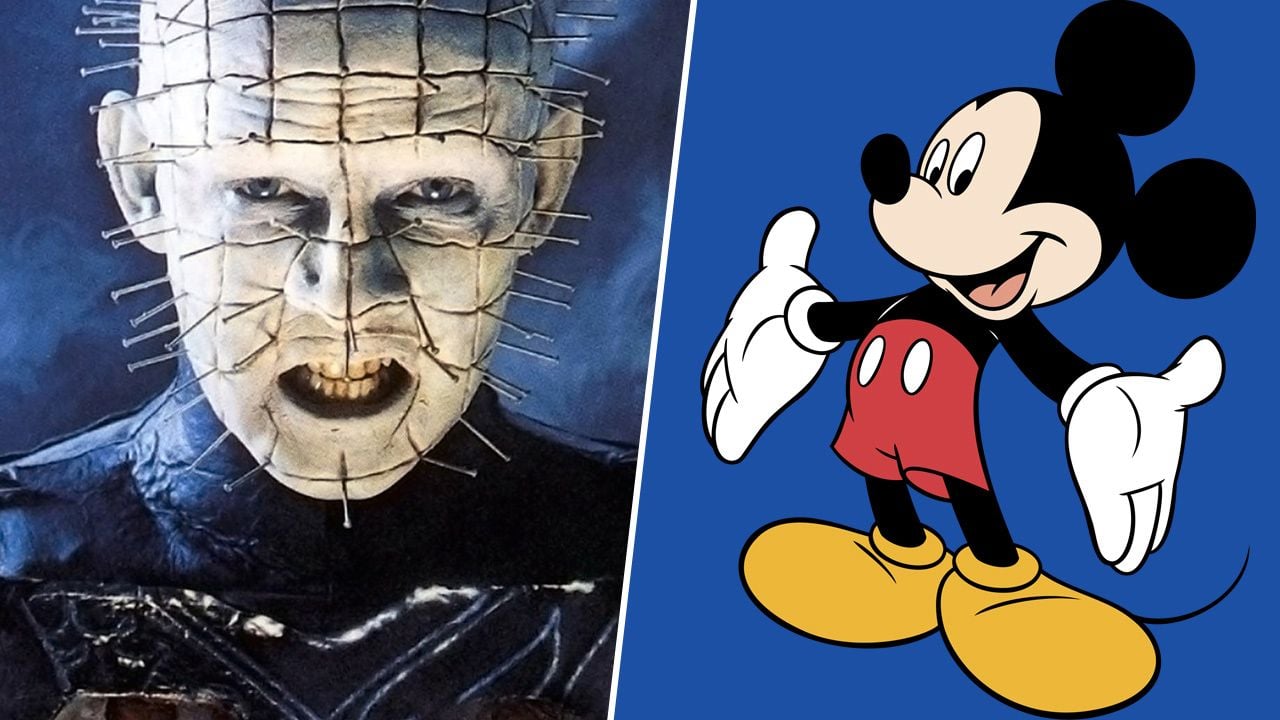
A fascinating look at this abandoned project recently emerged, detailing how the House of Mouse, known for its family-friendly fare, pursued the creator of the visceral Hellraiser and Nightbreed.
Clive Barker, a prolific British artist, novelist, and filmmaker, had cultivated a reputation for dark, surreal, and often grotesque imagery. Yet, by the late 1990s, he was also developing Abarat, a sprawling fantasy universe born from hundreds of his own dreamlike oil paintings. The story follows Candy Quackenbush, a teenager from a mundane Minnesota town, who is transported to the magical archipelago of Abarat. This world comprises 25 islands, each perpetually fixed at a different hour of the day, and where Candy finds herself pursued by the sinister Christopher Carrion, Lord of Midnight.
Disney, eager to tap into the burgeoning fantasy market, was captivated by Barker's visual presentation of Abarat, reportedly committing to the project without having read a single word of the books. In 2000, they announced a major deal, paying Barker $4 million for the rights, with another $4 million contingent on the project's progress. The vision was grand: a multimedia franchise spanning films, TV series, interactive games, and even theme park attractions.
Michael Mendenhall, then President of Marketing and Synergy at Walt Disney Studios, expressed immense excitement. He envisioned the films as "a blend of Harry Potter and a contemporary version of The Wizard of Oz, but with even richer characters and a universe." Barker himself was optimistic, seeing the collaboration as an opportunity to broaden his artistic scope beyond the "master of horror" label.
However, the seeds of the project's demise were sown early. Barker's unique aesthetic, characterized by bizarre creatures and dark whimsy, proved fundamentally at odds with Disney's carefully guarded brand. While Mendenhall spoke of pushing cinematic technology, he also cautioned, "We will never do anything that could harm the Disney brand, never!" This inherent conflict meant any faithful adaptation risked alienating Disney's core audience, while diluting Barker's vision would betray the source material and its existing fans.
Further complicating matters were shifts within the industry and Disney itself. The mid-2000s saw a series of big-budget fantasy films underperform or outright flop, such as The Golden Compass and the declining returns of the Narnia sequels. This made studios wary of massive, unproven investments, with Abarat estimated to cost over $150 million per film. The arrival of Bob Iger as Disney CEO and subsequent acquisitions of Pixar, Marvel, and Lucasfilm further cemented a strategy focused on established, highly profitable franchises. Abarat, a risky, complex, and unproven property, lost its strategic priority.
Crucially, the franchise's viability depended on Barker's literary output. The initial plan hinged on the regular publication of five volumes. Yet, Barker's meticulous creative process and, tragically, severe health issues, caused significant delays. While the second book arrived in 2004, the third wouldn't be published until 2011. In 2012, Barker suffered a life-threatening toxic shock that led to a coma and a long recovery, effectively halting work on the final two books. Without a complete literary foundation and facing untenable production timelines, the ambitious film series became impossible.
Disney's adaptation rights expired in 2006. When the studio reportedly offered to retain them for another four years without further payment, Barker promptly rejected the proposal. As he later stated, "The work is back in my hands, I own it and I owe them absolutely nothing. Their working methods did not suit me."
Today, Barker, now 74, has announced he is dedicated to completing the Abarat saga with the forthcoming fourth and fifth volumes. In the current landscape of streaming blockbusters, the dream of seeing Candy Quackenbush's adventures on screen may yet be realized, but this time, it will undoubtedly be under the watchful, protective eye of its original creator.