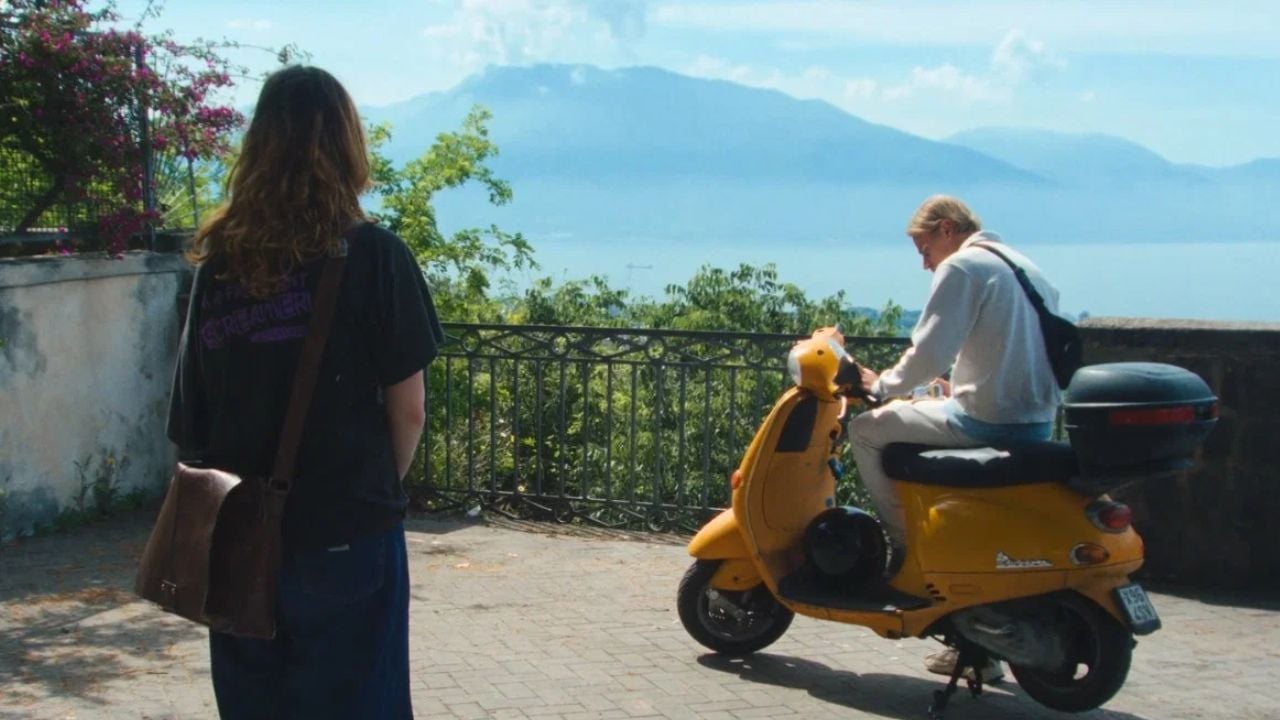
Marine Atlan's "La Gradiva" takes audiences on a transformative journey with a group of French high school students on a school trip to Naples and the historic ruins of Pompeii. What begins as an educational excursion quickly devolves into an intense exploration of burgeoning desires, simmering anger, and the overwhelming emotional landscape of adolescence. As the students confront the petrified remnants of Pompeii, they are plunged into their own internal maelstroms, mirroring the ancient city's abrupt end.
Atlan, making her directorial debut after an accomplished career as a cinematographer on films like Iris Kaltenbäck's "Le Ravissement," brings a remarkable sense of realism to "La Gradiva." Her approach to storytelling is rooted in extensive research, including numerous interviews with high schoolers to capture their authentic concerns, from first loves and social dynamics to anxieties about their future. To further immerse herself in their world, Atlan organized a real school trip that mirrored the film's narrative. "We hung out with the young people constantly," she revealed, underscoring her commitment to an unvarnished portrayal of this pivotal age.
This dedication to authenticity extended to the film's casting. The student roles are largely filled by non-professional actors, discovered through a two-year casting process across various high schools and theater workshops. Colas Quignard, who plays the central character Toni, was notably scouted during the preparatory school trip, initially having no aspirations for acting. Complementing the young cast is Antonia Buresi, who delivers a powerful performance as Madame Mercier, the accompanying teacher. Buresi also undertook her own research, meeting with educators to imbue her character with genuine depth and relatability.
The picturesque yet volatile backdrop of Southern Italy—Naples, Pompeii, and Torre del Greco—is more than just scenery; it's a character in itself. Atlan's lens captures the vibrant chaos and poetic beauty of Neapolitan life, from colorful buildings and laundry lines to impromptu football matches. The ever-present Mount Vesuvius looms, a constant reminder of hidden danger and the thin line between splendor and destruction, echoing the tumultuous inner lives of the teenagers. The film masterfully blurs the lines between documentary and fiction, with Atlan describing her approach as capturing "declared situations, but made in a quasi-documentary setup."
Central to the narrative is Toni's personal quest to trace his grandmother's past, who fled Naples after the 1980 earthquake. His initially joyful narratives about his ancestors gradually unravel, revealing a more difficult family reality and unspoken secrets. This journey becomes a poignant exploration of social determinism, questioning the possibility of emancipation when confronted with harsh truths. Each character, including James (Mitia Capellier-Audat), Suzanne (Suzanne Gérin), and Madame Mercier, faces their own profound disequilibrium. As Atlan aptly puts it, "Each character surrenders to something, [...] all the characters eventually find themselves confronted with tragedy." Their intertwining paths mark a transformative, unforgettable moment in their lives, leaving them with lingering questions.
"La Gradiva" stands as a powerful, realistic fiction where the mundane transforms into the grand and the tragic, revealing the sordid alongside the marvelous. It's a film that promises to resonate deeply, arriving in cinemas on October 21.