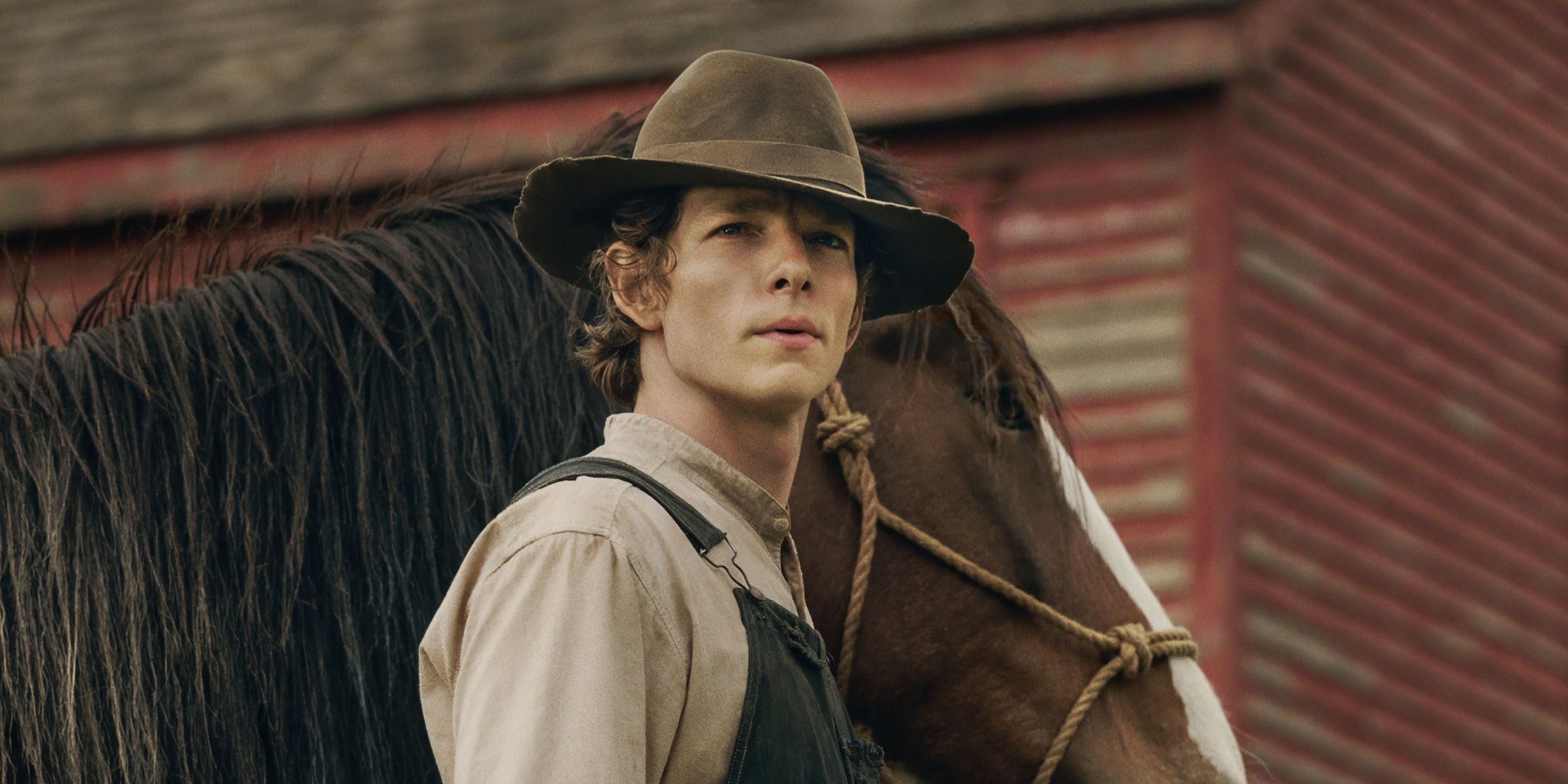
Over 70 years after its initial publication, John Steinbeck's epic East of Eden is once again making its way to screens, this time as a sprawling seven-episode series on Netflix. The adaptation, arriving October 1, 2026, is particularly noteworthy given its creative force, Zoe Kazan, whose personal connection to the source material runs deep. Her grandfather, Elia Kazan, famously directed the iconic 1955 film adaptation that starred James Dean.
The series boasts an impressive ensemble, with Academy Award nominee Florence Pugh taking on the complex and often disturbing role of Cathy Ames. She is joined by Christopher Abbott as Adam Trask and Mike Faist as Charles. The next generation of Trask brothers, Caleb and Aron, will be portrayed by Joseph Zada and Joe Anders, respectively. The cast also includes Hoon Lee as the insightful Lee, Tracy Letts as Cyrus Trask, Martha Plimpton as Faye, and Ciarán Hinds as Samuel Hamilton. Jeb Stuart serves as co-showrunner, with Garth Davis directing the first four episodes and Laure de Clermont-Tonnerre helming the final three.
At its heart, East of Eden is a profound examination of family dynamics, jealousy, and the enduring question of inherited destiny. Steinbeck masterfully weaves together the narratives of the Trasks and the Hamiltons, consistently drawing parallels to the biblical story of Cain and Abel. The central conflict revolves around the Trask family, beginning with brothers Adam and Charles vying for their father's affection. Adam's marriage to Cathy, a character whose capacity for cruelty defines much of the novel's dark undertones, sets the stage for the next generation. After giving birth to twin sons, Caleb and Aron, Cathy abandons the family, leaving Adam to raise them in California's Salinas Valley.
Years later, Caleb and Aron find themselves trapped in a similar emotional struggle to their father and uncle. Aron embodies idealism and dutifulness, while Cal is troubled and resentful, convinced of an inherent flaw within himself. Their relationship becomes a modern reinterpretation of the Cain and Abel narrative, prompting Steinbeck to explore whether individuals are truly bound by their inherited nature. The novel’s defining philosophical concept, “timshel,” derived from a biblical passage meaning “thou mayest,” posits that individuals possess the freedom to choose their own path and overcome their predispositions. For Cal, this choice becomes paramount: to either succumb to the darkness he perceives within himself or fight against it.
Steinbeck himself considered East of Eden, published in 1952, his magnum opus, a culmination of his literary understanding. He intended the novel, in part, as a means to preserve the rich sights and sounds of California’s Salinas Valley for his sons, making the landscape an integral character in the narrative. The story is also deeply rooted in Steinbeck’s own family history, notably inspired by his maternal grandfather, Samuel Hamilton, who appears as a character. The narrative gracefully spans generations and locations, ultimately centering on the Trask family's drama against the backdrop of early 20th-century California and World War I. Its biblical title and themes of guilt, envy, love, and self-destruction are unmistakable, challenging readers to consider whether one is condemned to repeat ancestral sins.
This Netflix series enters a legacy of adaptations. Elia Kazan's 1955 film, while a classic, famously focused only on the latter portion of Steinbeck's expansive novel. The 1981 ABC miniseries had more scope, stretching across three installments to tell the full story. With seven episodes at its disposal, the new Netflix version, as reported by Collider, is afforded ample room to delve into the intricate history of the Trask family, offering a potentially more nuanced and complete adaptation of this literary giant. Filming for the series took place in New Zealand, utilizing locations such as Auckland, Dunedin, and Oamaru, between October 2024 and March 2025.