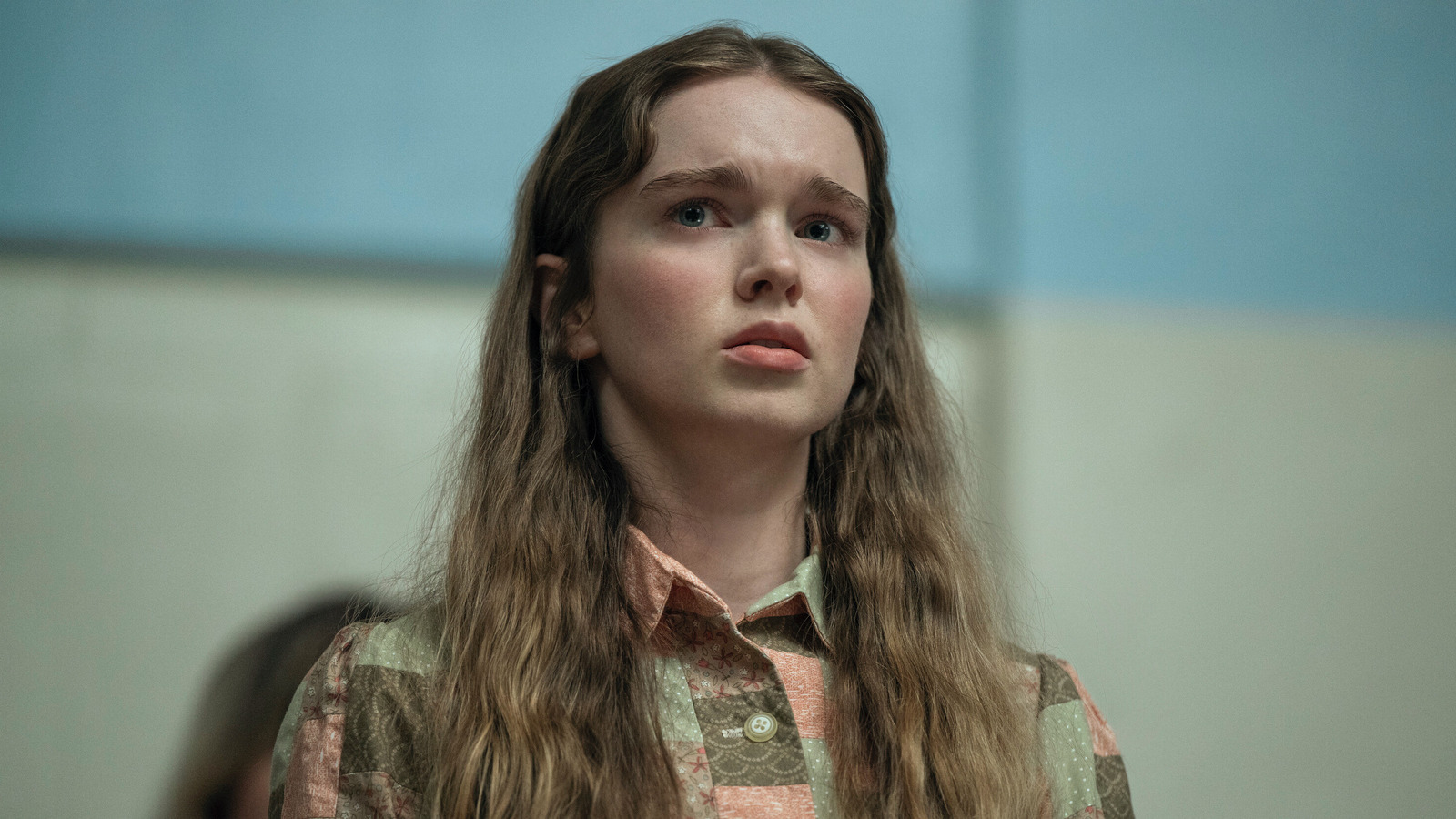
Stephen King's Carrie, a tale of a telekinetic high school outcast and her religiously fanatical mother, culminating in a blood-soaked prom night, is deeply embedded in pop culture. Over the decades, it has seen multiple adaptations, from Brian De Palma's seminal 1976 film to a Broadway musical and two remakes. With such a saturated history, the question of what new ground could be explored seemed pertinent.
Enter Mike Flanagan, a director celebrated for his nuanced and often heartbreaking approaches to horror, particularly his successful adaptations of King's Gerald's Game and Doctor Sleep. His new Carrie series for Prime Video, however, takes a notably different path, eschewing a direct retelling for a more expansive, character-driven narrative across eight episodes.
SlashFilm's review highlights that while the series retains core elements – Carrie's powers, her domineering mother, and the inevitable prom night tragedy – it deliberately subverts expectations. Flanagan and his team have significantly broadened the roles of existing characters and introduced new ones to stretch the story into a television format. This approach, while commendable for its ambition, occasionally creates a jarring experience for viewers familiar with the source material.
Perhaps the most striking change is the show's effort to humanize nearly every character, including those traditionally portrayed as monstrous. Carrie's mother, Margaret White, played by frequent Flanagan collaborator Samantha Sloyan, is no longer a one-dimensional villain. Her religious fervor is tinged with a modern distrust of government, and crucially, the series hints at a genuine, if twisted, love for her daughter—a stark departure from previous incarnations. The high school bullies, particularly lead tormenter Chris Hargensen (Alison Thornton), are also given backstories and insecurities meant to explain their cruelty, rather than simply presenting them as purely evil. The reviewer admits this softening of Chris was a point of contention, stating, "I simply don't think Chris needs to be softened in any way, shape, or form."
The series finds its strongest footing in the performance of Summer H. Howell as the titular Carrie White. Howell's portrayal is described as a revelation, making Carrie inherently likable and brimming with curiosity, offering a stark contrast to Sissy Spacek's more haunted depiction. The narrative sees Carrie, sheltered for years by her parents, thrust into high school after her father's death, where she navigates social media bullying and discovers her telekinetic abilities. The review praises the show's "sweeter, kinder moments," such as Carrie's wonder upon discovering a school library, as its most effective emotional beats.
However, the review notes that as the series progresses toward its conclusion, it introduces a "major narrative wrinkle" concerning Carrie's powers that ultimately feels misguided. While Flanagan is lauded for his attempt to reinvent a classic, the reviewer questions whether these significant departures ultimately dilute the essence of Carrie, leading to a show that "starts to not really feel like 'Carrie' anymore." Despite these reservations, Howell's performance is cited as a compelling reason to watch.
With a SlashFilm Rating of 6 out of 10, Flanagan's Carrie is a bold, if imperfect, reinterpretation. The director has expressed a "dream scenario" of a three-season run, suggesting a long-term vision for this reimagined world. The series is set to stream on Prime Video on October 7, 2026.