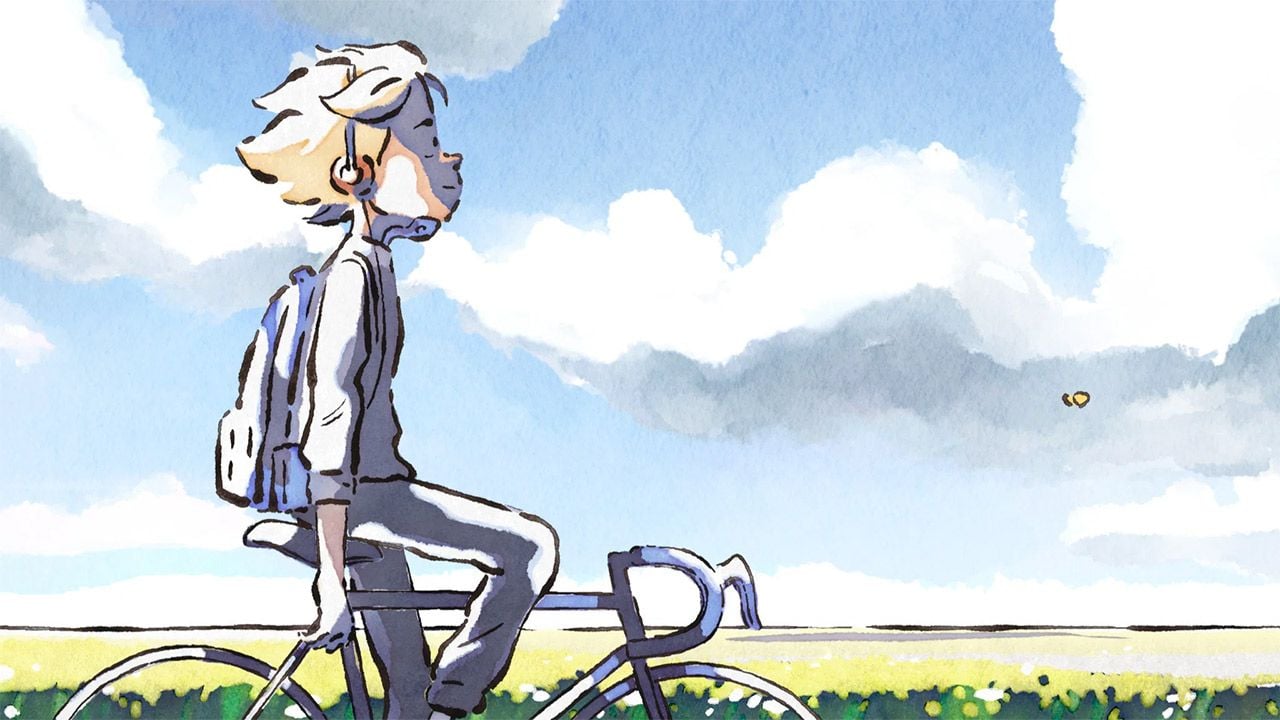
Popcorn Wire has learned that 'Le Corset' introduces audiences to Christophe, an 11-year-old boy growing up on a family farm in the Beauce region of France. His life is marked by the emotional reticence of his farming family and the physical constraint of a corset he must wear. As the family farm faces financial hardship, Christophe embarks on a journey of self-discovery, finding solace in music and forging a transformative connection with a girl named Clara.
Director Louis Clichy, known for his work on Pixar's 'WALL-E' and co-directing the 'Astérix' animated films, brings a unique artistic vision to 'Le Corset'. The film's aesthetic, crafted with watercolor and India ink, embraces an artisanal, minimalist approach. Clichy explains that this choice was deliberate, stating, "It allows us to avoid getting lost in unnecessary details, leaving the field open for embodiment, authenticity, and a certain truth of feelings." This stripped-down visual style amplifies the emotional resonance of the characters and the vast, often stark, rural landscapes.
The corset itself serves as a powerful metaphor throughout the narrative. More than just a medical device, it becomes a dynamic storytelling tool, embodying Christophe's internal struggles. When his anger becomes overwhelming, his environment literally shifts and tilts, reflecting his emotional turmoil. Clichy notes, "I wanted to bear witness to it but also to have fun with it, to make it an almost fantastic element, as if the corseted body became a door to the imagination." This fantastical element underscores the profound physical and emotional transformations inherent in adolescence.
Music also plays a crucial, intradiagetic role, providing Christophe with an avenue for expression and escape from his stifling home life. The film weaves classical pieces like Gabriel Fauré’s 'Requiem' with more contemporary sounds, such as Stéphanie de Monaco’s 'Ouragan', to underscore Christophe’s journey towards emancipation. His passion for music offers a space where he can flourish, disconnected from the emotional constraints of his family.
'Le Corset' poignantly captures the universal experience of transitioning from childhood to adolescence, marked by burgeoning desires and a growing need for independence. This emotional evolution unfolds against the backdrop of a changing rural world. The Beauce setting, a region often idealized, is depicted with a raw honesty, showcasing immense, intensely farmed lands and closed-off farmhouses that Clichy suggests reflect a certain "social confinement." Within Christophe's family, emotions are rarely articulated, and introspection is absent, creating a challenging environment for a child grappling with new feelings. Clichy, drawing from his own experiences, highlights this communicative void: "Phrases like 'I'm angry' or 'I have feelings for you' are never spoken."
Beyond personal struggles, the film also subtly addresses the changing face of traditional farming, hinting at the eventual disappearance of Christophe’s family farm. 'Le Corset' ultimately offers a sensitive and sincere portrayal of a child's quest for self-discovery and freedom in a world that often struggles to express itself.