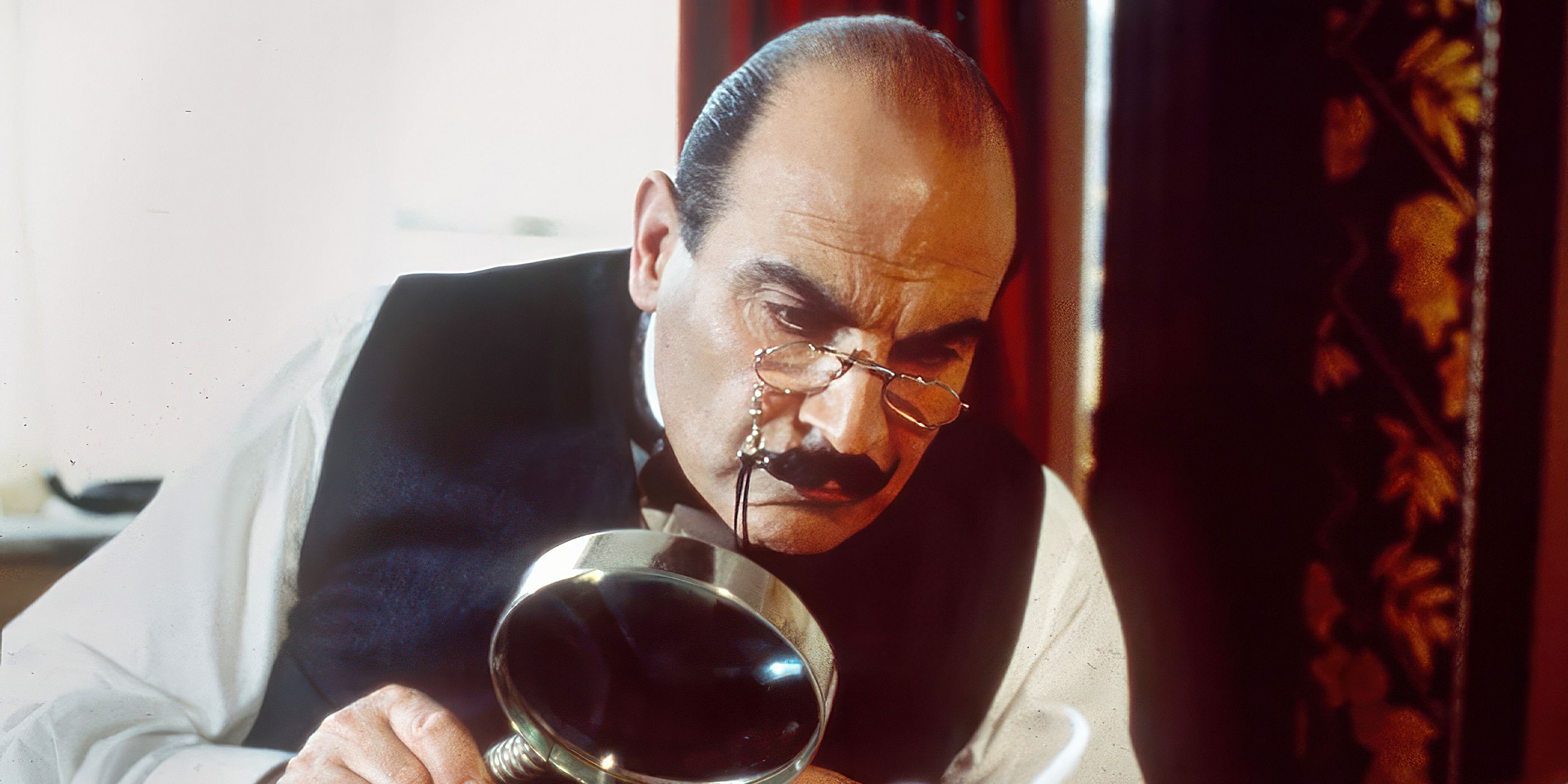
For over two decades, audiences watched David Suchet's Hercule Poirot meticulously unravel crimes, always upholding the unwavering belief in justice. However, the series finale, "Curtain: Poirot’s Last Case" (Series 13, Episode 5), delivered a seismic shift, challenging everything Poirot, and viewers, understood about his character. This wasn't a typical murder mystery; it was a psychological battle that stripped Poirot of his moral certainty.
The case centered on Stephen Norton, a villain unlike any Poirot had faced before. Norton wasn't a direct killer, but a master manipulator, subtly influencing others to commit murders while remaining beyond the reach of conventional justice. Poirot, connecting the seemingly disparate dots, realized he was up against an opponent who left no tangible evidence, making him untouchable by the law. As Norton's insidious trail of victims mounted, Poirot found himself in an unprecedented position of powerlessness. His unshakeable belief in the system crumbled under the weight of Norton's undetectable evil.
Driven by a desperate conviction that Norton had to be stopped to prevent further harm, Poirot made a choice that irrevocably altered his character: he deliberately killed Norton. This act, a stark betrayal of his lifelong principles, transformed the iconic detective into a murderer himself. The victory, if it could be called that, was the darkest and most morally unsettling of his career. Grappling with the profound implications of his actions, Poirot then took his own life, leaving behind a legacy forever complicated by his final, desperate act of self-sacrifice.
While Suchet's portrayal concluded with such a powerful, character-defining arc, Agatha Christie's Hercule Poirot is far from finished on screen. The BBC recently announced a new series titled Hercule, set to star Edward Bluemel (known for My Lady Jane and Agatha Christie's Seven Dials). This new adaptation promises to explore a younger, more naive Poirot in his formative years, delving into celebrated Christie stories like 1933's Lord Edgware Dies.
"I feel very lucky to have been trusted with such an iconic character who has been played by so many great actors," Bluemel stated in the BritBox series announcement, expressing his eagerness to continue Poirot's legacy.
<figure><picture><source srcset="https://static0.colliderimages.com/wordpress/wp-content/uploads/2026/08/edward-bluemel-hercule-poirot.jpg?q=49&fit=crop&w=500&dpr=2" media="(max-width: 480px)"><source srcset="https://static0.colliderimages.com/wordpress/wp-content/uploads/2026/08/edward-bluemel-hercule-poirot.jpg?q=49&fit=crop&w=800&dpr=2" media="(max-width: 767px)"><source srcset="https://static0.colliderimages.com/wordpress/wp-content/uploads/2026/08/edward-bluemel-hercule-poirot.jpg?q=49&fit=crop&w=825&dpr=2" media="(max-width: 1023px)"><img src="https://static0.colliderimages.com/wordpress/wp-content/uploads/2026/08/edward-bluemel-hercule-poirot.jpg?q=49&fit=crop&w=825&dpr=2" alt="Edward Bluemel in Hercule" decoding="async" loading="lazy" height="826" width="1650"></picture><small>Image via Britbox</small></figure>
While the character of Hercule Poirot will undoubtedly continue to be adapted across various mediums, David Suchet's portrayal in Poirot remains a monumental achievement. Its 13 seasons, culminating in a finale as shocking as it was thought-provoking, solidified its place among the greatest detective shows of all time. The forthcoming Hercule certainly has some considerable shoes to fill.