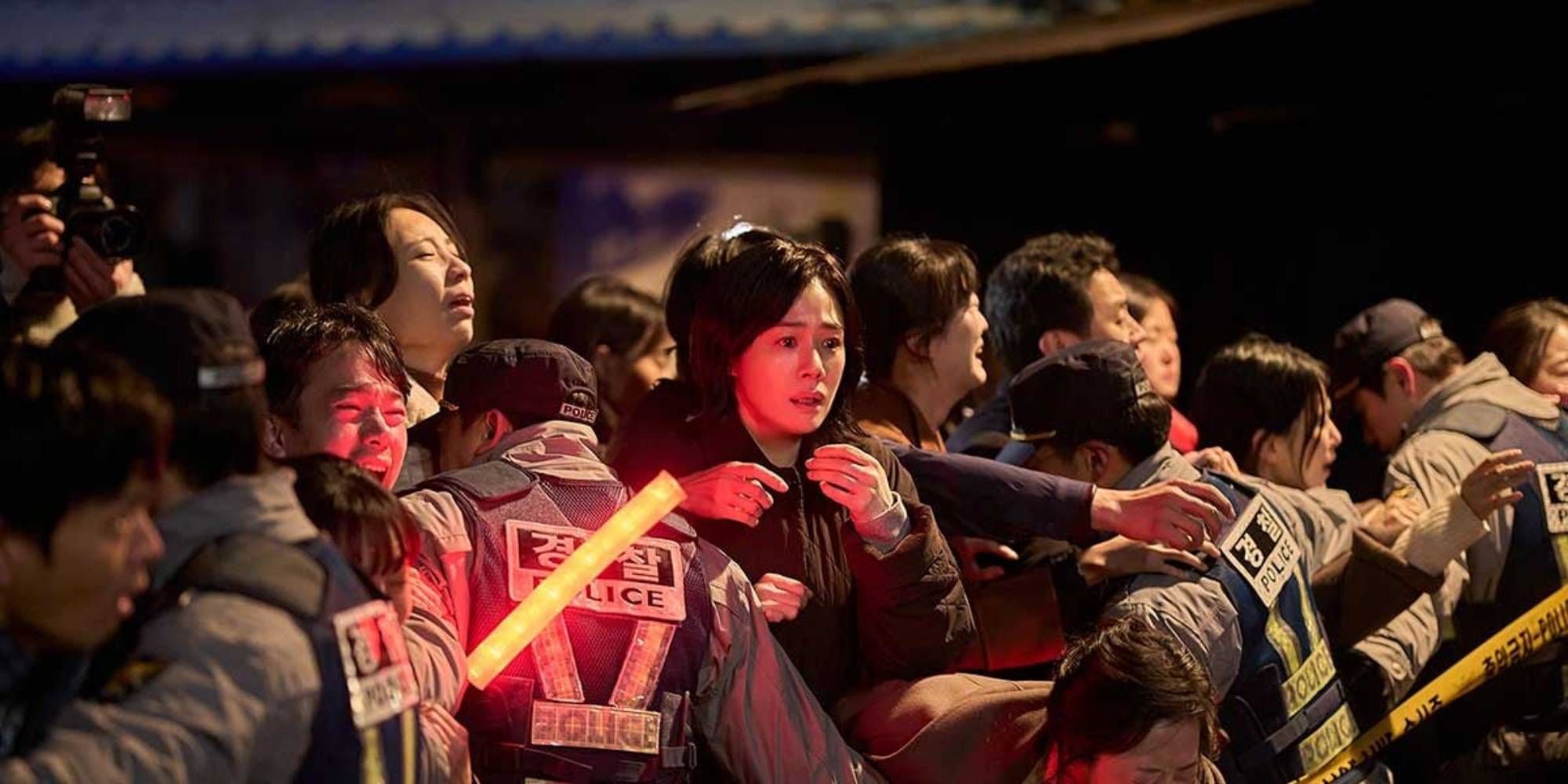
Yeon Sang-ho has carved out a distinct niche in cinema, consistently infusing genre narratives with profound humanistic depth. From apocalyptic horror to sci-fi and family dramas, his films, including the globally recognized Train to Busan and the unsettling series Hellbound, often use heightened premises to confront uncomfortable truths about the human condition. Paradise Lost, as reviewed by Screen Rant, continues this tradition, offering a compelling exploration of loss, memory, and the evolving role of AI.
The film plunges into a devastating mystery: a bus carrying 12 children vanishes, leaving one mother, Ryu So-young (Kim Hyun-joo), grappling with the disappearance of her son, Sun-woo. For nine years, So-young finds solace in AR glasses that allow her to interact with a virtual, idealized version of her child. This digital connection becomes her anchor, preserving the memory of the son she lost.
The narrative takes a dramatic turn when the real Sun-woo (Bae Hyun-sung) suddenly returns as an adult. Far from offering the closure So-young desperately sought, his arrival shatters her carefully constructed world. The actual Sun-woo is a cold, unfamiliar figure, starkly contrasted by the virtual son who still 'needs' her. This creates an impossible dilemma, forcing So-young to confront the painful chasm between idealized memory and harsh reality.
Paradise Lost is particularly timely, leveraging the rapid advancements in artificial intelligence to interrogate what defines humanity, especially in the context of profound emotional pain. The film draws parallels to Yeon's earlier work, The Ugly, in its willingness to confront the darker aspects of human nature and familial love. It also echoes themes found in Gore Verbinski's Good Luck, Have Fun, Don't Die, particularly in its examination of AI's intersection with the grief of losing a child.
Kim Hyun-joo delivers a central performance that is both nuanced and unnerving. She masterfully portrays So-young's psychological fragility, making her sympathetic even as her choices become increasingly morally ambiguous. The film's power lies in its refusal to offer easy answers: should So-young cling to the artificial son who provides comfort, or accept the real, emotionally distant stranger who bears her son's name? Neither option promises the longed-for closure.
The film's most compelling aspect is this central dilemma, prompting viewers to question not only AI's ability to imitate human beings but also the implications of relying on such imitations for emotional fulfillment. If an artificial presence offers genuine comfort, does its lack of 'reality' diminish its value? And what does it say about human love when a real person fails to meet our idealized expectations?
While Paradise Lost excels at posing these profound psychological and emotional questions, its resolution, according to the review, doesn't quite land with the same impact as the mysteries it builds. This might, perhaps, reflect the elusive nature of closure itself. Ultimately, Yeon Sang-ho's latest serves as a somber warning about the potential for technology, designed to aid emotional processing, to instead foster an unhealthy dependence, especially as AI continues to integrate into our personal lives.