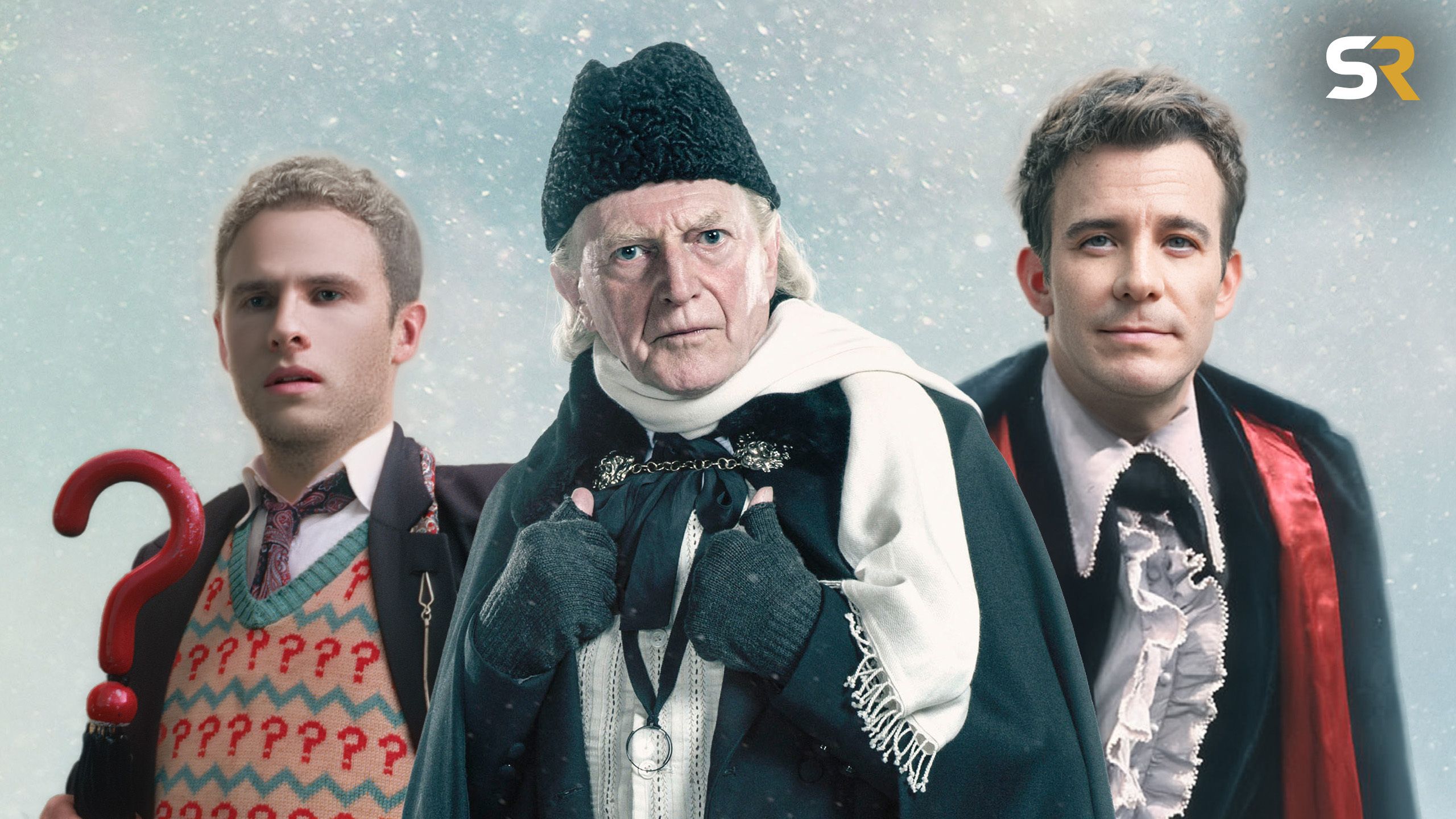
The enduring sci-fi saga of Doctor Who stands apart in its approach to character continuity. Instead of traditional recasting, the Doctor regenerates, allowing for a new actor to embody the same character with a fresh personality. This unique mechanism has fostered a rich history of multi-Doctor stories, where past and future incarnations meet, often featuring original actors returning to their iconic roles, regardless of time's passage.
However, there's a notable precedent for recasting the First Doctor, originally played by William Hartnell, following his passing. Richard Hurndall stepped into the role for "The Five Doctors" in 1983, and more recently, David Bradley has earned widespread acclaim for his portrayal in "An Adventure in Space and Time" and subsequent on-screen and audio appearances. Bradley's ability to capture Hartnell's essence, despite some script criticisms for his appearance in "Twice Upon A Time," proves that a successful recast is possible.
Building on this idea, Screen Rant recently sparked conversation by suggesting a full imaginative recast for the classic era's Doctors. Here's a look at their intriguing proposals:
For the Second Doctor, originally Patrick Troughton, Screen Rant suggested Reece Shearsmith. Known for his versatility in shows like Inside No. 9 and The League of Gentlemen, Shearsmith's proven ability to switch between comedic and intense personas aligns perfectly with Troughton's unique blend of clownish humor and ruthless intelligence.
Luke Thompson, recognized for his work in Bridgerton, was put forward as an ideal candidate for the Third Doctor, Jon Pertwee. Thompson's blend of charm, eccentricity, and confident stage presence – a key characteristic of Pertwee's UNIT-era Doctor – makes him a compelling choice, especially given that Pertwee's son, Sean Pertwee, has consistently declined the role.
The Fourth Doctor, Tom Baker, is arguably the hardest to recast due to Baker's indelible mark on the character. Screen Rant's bold choice was Harry Melling. Having matured significantly since his Harry Potter days, Melling has showcased a remarkable capacity for awkwardness, psychological complexity, and mischievous intelligence in roles like The Queen's Gambit, qualities that could capture the depth of Baker's early, less overstated performances.
For the Fifth Doctor, Peter Davison's youthful and often underestimated incarnation, Tom Hughes was proposed. Hughes' portrayal of Albert in Victoria, marked by quiet confidence, seriousness, and complex emotions simmering beneath the surface, mirrors the understated yet deeply felt qualities of Davison's Doctor.
Simon Russell Beale was suggested for the challenging Sixth Doctor, Colin Baker. This incarnation's original run was often hampered by behind-the-scenes issues, leading to a character that has been significantly re-evaluated and redeemed in audio dramas. Beale, a distinguished theatrical actor, possesses the intellectual authority, pomposity, and even the occasional menace needed to redefine and elevate this complex Doctor.
Finally, for the Seventh Doctor, Sylvester McCoy's transformation from a comedic figure to a dark, manipulative hero was largely unfinished on screen. Screen Rant nominated Iain De Caestecker as the perfect fit. His extensive range, demonstrated through complex emotional arcs and even a 'mirror-world' villain in Agents of S.H.I.E.L.D., positions him well to fully explore the Seventh Doctor's profound character journey, with his Scottish accent being an added bonus.
This speculative exercise by Screen Rant offers a fascinating glimpse into how new interpretations could breathe fresh life into Doctor Who's foundational characters, inviting fans to ponder the endless possibilities of time and space.